How to properly inspect the undercarriage of a tracked machine
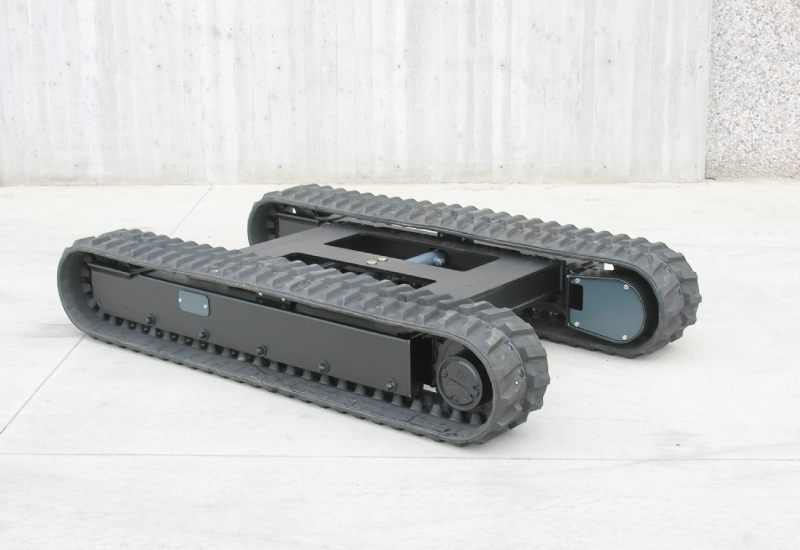
Maintaining top performance: a complete guide to tracked undercarriage inspection
The undercarriage is the operational heart of every tracked machine, from skid steer loaders to dump trucks and aerial platforms. Specifically, it is the part that bears the most weight, manages traction and allows movement on all types of terrain. Consequently, proper maintenance and regular inspection are not only advisable but essential to help ensure safety, efficiency and the longevity of the entire machine.
Through this guide, we at Hinowa wish to illustrate the key steps for inspecting the undercarriage of tracked machines, so that wear can be identified early and service issues can be prevented.
The importance of regular undercarriage inspection: an investment in durability
The undercarriage is a complex system, made up of multiple elements working in synergy, i.e. rollers, idlers, sprockets, catenaries and skids. Each component is subject to varying stress and wear depending on its use, the type of terrain and the working hours; a periodic inspection, preferably daily or at the beginning of a shift, therefore, allows the health of these elements to be monitored and maintenance work to be scheduled before minor problems turn into significant failures.
Every day, this type of machine faces rough terrain, mud, rocks, dust and extreme temperatures, all of which contribute to wear and tear. Ignoring the warning signs can lead to a series of negative consequences that result in higher long-term operating costs, i.e. a higher TCO (Total Cost of Ownership) that includes:
- an increase in operating costs;
- unexpected machine downtime;
- repair costs;
- a reduction in machine life.
A visual and tactile inspection, however simple, can provide valuable information: you don't need to be an experienced mechanic to notice obvious anomalies, you just need to learn to know your machine and pay attention to details. In all this, the machine's owner's manual is undoubtedly the main guide: the advice, therefore, is always to consult the manufacturer's specifications for wear tolerances and recommended procedures.
Guide to the visual inspection of the undercarriage
Inspection of the undercarriage should be an integral part of the pre-operation routine. It should be carried out with the machine stationary, on a flat, safe surface, with the engine switched off:
Initial cleaning and operating environment
First of all, it is necessary to ensure that the undercarriage is as clean as possible; mud, debris, stones and abrasive dirt can, in fact, hide cracks, wear or other damage. If necessary, coarse build-up should be removed with a shovel or high-pressure cleaner, paying attention to the water pressure on sensitive components and seals.
Tracked inspection
The first thing to check is the tension of the tracked tracks: if they are too loose they can derail, while if they are too tight they can cause wear of all components and fuel consumption. For steel tracked tracks, it is recommended to check the track deflection between the upper rollers and the idler wheel, following the measurement specifications in the machine's user manual. For rubber tracked tracks, it is recommended to check the distance between the lower rollers and the track itself, following the specifications in the manual.
Next, the skids (soles) are examined: their wear must be checked, paying attention to the edges, which should be intact. If they are excessively thinned, deformed, bent or have deep cracks, it is time to consider replacement. Attention must also be paid to bolts and fastening nuts: they must all be present, well tightened and without signs of play.
Finally, inspect the pins and bushings, the junction points of each tracked link, which are subjected to enormous stress. We must look for any signs of excessive wear or ovalisation (a sign of internal play). Excessive play between pins and bushings is an indicator that the track is stretched and nearing the end of its useful life, while uneven wear can also be a sign of incorrect track tension or misalignment.
Rollers (lower and upper)
The rollers support the weight of the machine and guide the tracked track, so it is essential that they are in excellent condition. Start by checking the tread wear of the rollers: they must have an even contact surface, so look for signs of flattening, deep grooves, cracks or chips in the tread. Excessive wear reduces the contact surface and increases friction, creating stress points on the tracked track.
Then the seals and oil leaks are checked: rollers are often sealed and lubricated internally, so any oil leaks around the axles or roller bodies should be detected. A leak indicates a seal failure and possible lack of lubrication, which, if not resolved, could lead to progressive overheating and irregular roller operation.
Finally, the play and rotation of the rollers is assessed, moving them with a lever to check if there is excessive play on the axle: the rollers should turn freely when the machine is lifted or moving slowly, whereas a blocked roller or one that turns with difficulty quickly wears out the tracked and creates an abnormal friction point.
Idler wheels
This is followed by checking the tread wear of the idler wheel: similar to rollers, the contact surface is inspected for flattening, grooves or deformation, as the idler wheel is essential for guiding the tracked track and maintaining its tension.
The presence of seals and oil leaks is then checked; again, oil leaks indicate a problem in a lubricated component.
Finally, the axial movement is checked: the idler wheel is often mounted on a system that allows tracked tension adjustment and it is necessary to ensure that there is no excessive play in its axial movement and that it moves smoothly when attempting to adjust it.
Sprockets
At this point, inspect the wear on the sprocket teeth: the teeth engage directly with the tracked pins or bushings, so their shape must be checked, which must be relatively sharp and well defined. Hook" or excessively sharp teeth indicate advanced wear and the need for imminent replacement, but uneven tooth wear can also indicate chain misalignment or incorrect track tension.
Any signs of cracks or breaks are also sought.
Guards and casings
Not to be forgotten are the external protections, which play a key role in preventing damage: it is important to ensure that all protections (if present) are intact and well secured, so as to prevent the accumulation of debris, stones and mud.
Structural supports and frame
Finally, careful observation of the supporting structure can be useful in assessing its overall condition: a general analysis of the undercarriage's supporting structure is carried out and cracked welds, frame deformations or loose bolts are sought, all of which are indicators of possible structural stress.
Quality makes the difference: Hinowa crawler undercarriages
When it comes to such important components as the undercarriage, construction quality plays a decisive role in their durability and reliability. And it is here that Hinowa stands out significantly in the panorama of construction machinery manufacturers.
With load capacities ranging from 500 kg to as much as 24 tonnes, Hinowa offers versatile, high-performance solutions for a multitude of applications, from agriculture and construction to the more specific needs of industry and the OEM sector. This variety translates into numerous available models, designed to adapt to different customer needs and deliver high performance even in the most difficult operating conditions.
Choosing a Hinowa tracked undercarriage means relying on state-of-the-art technology and a design focused on durability and efficiency: our products are made from high-quality materials and are regularly subjected to rigorous testing to ensure that every component, from rollers to sprockets, is able to withstand prolonged stress and the most extreme conditions.
Hinowa's commitment is not limited to the production of exceptional components, but also extends to customer support: every professional can, in fact, receive dedicated advice to choose the most suitable model to meet the most ambitious and high-performance requirements, providing perfect integration with their machines.
Need to learn more about the features of Hinowa undercarriages or find the perfect solution for your needs? Contact us today!

R.E.A. 210602
Cod. Fisc. e P. IVA 01996640239
Capitale Sociale 1.500.000 i.v.